A City Service at One Desk or Several?
Choosing a city service contact point? Compare one front desk with separate channels to find a clear starting point and reach specialist help when needed.
The most common mistake in choosing a city service contact point is assuming one front desk must solve every request or is useless. That assumption can cost residents time: a general contact may need to route a request, while a specialist channel can be hard to find before the right department is clear. A useful contact point makes its limits and handoffs easy to understand.
For city staff, the decision is not simply one desk versus many. It is where residents should begin, what the first contact can resolve, and how a request reaches someone with the right authority. For residents, those details explain why a call, online form, or counter visit may lead to a referral rather than an immediate answer.
Start with the question residents need answered
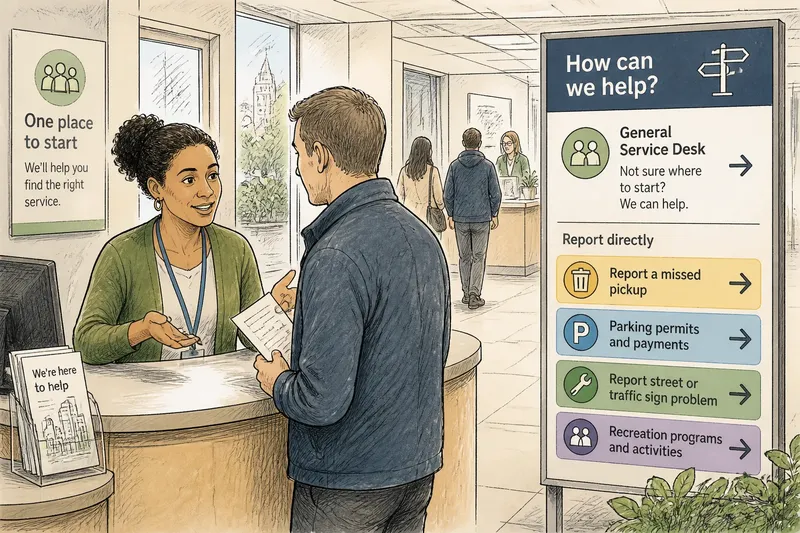
A single point of contact gives people one recognizable place to begin. It might be a general phone line, a service counter, a web portal, or a combination. The front door can clarify the request and direct it to the responsible team.
Separate channels let residents contact a specific service directly. A city might offer distinct routes for trash collection, parking permits, street maintenance, and recreation programs. Direct access can work well when residents can identify the service and the route requires specialized knowledge.
Consider the question a resident is likely to ask. “Who handles a missed pickup?” may be easy to route if the central desk has a current directory. “Why was this permit application returned?” may require someone who knows the rules and can review the file. The first contact should make the next action clear, even if it cannot complete the work.
Match the contact route to the services offered
A central contact point helps when residents often do not know which department owns a problem, a request crosses team boundaries, or someone needs help choosing among services. It can also reduce the burden on residents who cannot easily search a complicated city website or make several calls.
Separate channels make more sense when a service has distinct eligibility rules, technical questions, or time-sensitive routing that a general desk cannot reliably handle. Direct access can prevent a straightforward request from being passed among people and lets a specialist ask relevant questions immediately.
A city can offer both: one general contact for uncertain requests and direct links for familiar services. Think of the central desk as a building lobby. It helps visitors find the right room, but it should not pretend to be every room.
Make each handoff clear to the resident
A handoff happens when the first contact sends a request to another team or channel. Residents need to know whether the transfer has happened, what information was passed along, and who is responsible for the next response. Without that clarity, a central desk can feel like a dead end even when staff routed the request correctly.
Set a plain rule for ownership. The first contact should answer the question, identify the receiving team and explain the next step, or tell the resident what information is missing. If the resident must contact the specialist directly, say so and provide the correct route rather than offering a vague referral.
For staff, record only the details needed to route and follow up. A short service description, location, preferred reply method, and relevant reference number may be enough for many routine requests. The right information depends on the service and the city’s privacy practices. Avoid asking residents to repeat sensitive details without a clear reason.
Review the contact route before changing it
A city can inspect its contact model over a working week to identify confusing routes, not to claim a universal result. Include staff who receive general inquiries, specialist teams, and residents who use different ways to contact the city. For each review item, note what you observe and decide what to change based on that result.
- List the public routes: Check the main services residents ask about and the contact method shown for each. If a service has no clear route, add or clarify one; otherwise, keep the existing route under review.
- Check front-desk routing guidance: Ask staff where they would send common requests. If answers differ, update the shared guidance; if they agree, check that the public wording matches it.
- Follow ordinary inquiries: Trace a few requests from first contact to the responsible team. If residents are not told who has the request or what happens next, clarify the handoff; otherwise, preserve the useful message.
- Review forms and phone menus: Look for labels residents may not recognize. If a route uses internal department jargon, replace it with task-based wording; if the label is clear, retain it.
- Ask residents and staff where confusion occurs: Offer a short conversation or written prompt. If the same route causes uncertainty, revise its instructions; if feedback points to different needs, provide both a general route and a direct option where appropriate.
- Assign an owner to each change: Check whether a named staff role is responsible for keeping the route current. If no owner is clear, assign one before publishing the change; if one is already responsible, confirm that phone, print, and web information stay aligned.
This routine is a design review, not a substitute for a formal evaluation where one is needed. Keep attention on the resident’s path: where the person began, what staff said, and whether the next responsible contact was clear.
Offer choices without making residents learn the org chart
When a city provides several channels, label them by task rather than internal department. “Report a missed pickup” is easier to recognize than a division name residents may never have heard. Place a direct specialist route near the general contact and explain which requests belong there.
When a city uses one front door, describe what it can do. Say whether staff can answer common questions, submit a request for the resident, or only direct the resident elsewhere. Do not imply the desk resolves every issue if specialists make the decisions.
Say you oversee a city contact page, and residents often ask where to report a damaged traffic sign. Imagine adding a direct “Report a traffic sign problem” option while keeping the general service desk visible for unclear or related concerns. The observable result should be a page where residents can recognize the direct route and still find a fallback if their request does not fit the label.
What should residents and service managers ask?
Does one city contact point mean one person handles every request?
No. A single point of contact usually means one starting route, not one staff member with authority over every service. The request may still need to reach a specialist, and the resident should be told when that happens.
When should a city publish a direct specialist channel?
Publish one when residents can identify the service and the route helps avoid confusion or unnecessary transfers. Keep a general option for requests that cross service lines or do not fit the listed choices.
What should a resident ask after a referral?
Ask for the receiving team’s name, its contact method, and whether the resident or the city should make the next contact. Keep any reference number available when following up.
How can a city prevent a general desk from becoming a bottleneck?
Give front-line staff clear routing guidance, current service descriptions, and permission to transfer or submit routine requests where appropriate. Review recurring referrals and adjust public routes when residents repeatedly start in the wrong place.
Keep contact information current when services change
Contact arrangements can become confusing when departments reorganize, online forms move, or a service changes its eligibility process. Assign a staff owner to check public descriptions whenever those changes occur. Keep phone menus, printed notices, and web pages aligned so residents do not receive different directions depending on the channel.
For residents choosing where to begin, use the direct route when the service is clear and the general contact when it is not. A well-run city service contact point makes that choice visible, explains any handoff, and leaves the resident with a clear next action.
Before publishing or revising the contact page, check that it names who has responsibility for the next step. If that is hard to tell from the wording, residents may not know whom to contact after a referral. A clear route should show both the front door and where the request goes next.